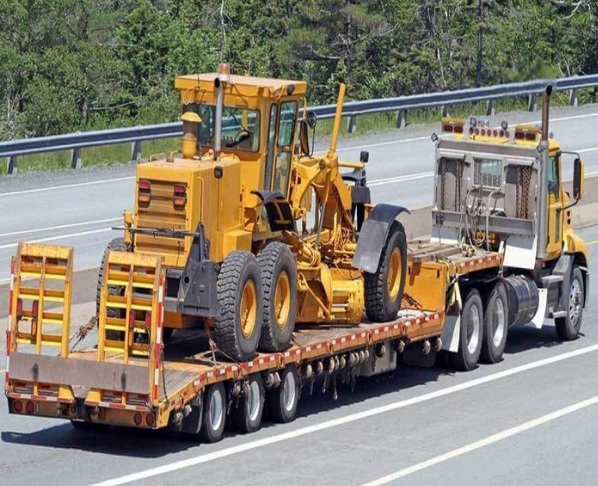
Choosing the right trailer manufacturer entails looking beyond the product itself. Engineering knowledge, material quality, customisation capabilities, safety precautions, and ongoing support all influence investment value.
Taking the time to ask these questions enables organisations to choose a manufacturer who understands their operational requirements and can design equipment accordingly. Finally, the best option is one that strikes the right balance between functionality, dependability, compliance, and long-term use.
Why lightweight materials are changing truck body design
Vehicle weight has a direct impact on how much payload a truck can legally and practically carry. A large truck body restricts the available space for equipment, supplies, and other items. Reducing excessive structural weight can help to enhance vehicle utilisation and operating efficiency.
Materials such as aluminium, high-tensile steel and fibre-reinforced composites are attracting attention in modern vehicle manufacturing. Each has distinct advantages based on the intended purpose.
Aluminium offers a valuable mix of low weight and corrosion resistance, making it ideal for situations where decreasing tare weight is critical. High-tensile steel provides significant strength while engineers may improve material thickness and structural designs. Composite materials also offer prospects for weight reduction, especially in situations where corrosion resistance and specific structural qualities are critical.
However, selecting a material entails more than just comparing weight. Load specifications, impact resistance, fatigue performance, maintenance requirements, and production costs must all be considered.
Smarter engineering goes beyond Material Selection
Lightweight design is only one aspect of the puzzle. Intelligent engineering determines how well diverse materials and structural components interact.
Modern design procedures increasingly rely on 3D modelling and digital engineering technologies to evaluate dimensions, component placement, and structural configurations prior to manufacturing. This allows any design flaws to be addressed earlier and helps ensure that the finished body satisfies its intended operational specifications.
A crane truck, for example, requires careful integration of its body, subframe, hydraulic systems, and stabilisation devices. Similarly, a flat-top tray requires properly placed tie-down points, suitable flooring, and dimensions that accommodate the equipment being transported.
These aspects should be considered during the initial design stage of custom truck bodies, rather than as after-construction adjustments.
This application-led approach contributes to the development of vehicles that are more practical to run, easier to maintain, and more suited to their intended use.
The Growing Importance of Purpose-Built Truck Bodies
Standardised truck bodywork can be effective for normal transportation needs. However, specialised sectors frequently have operational demands that cannot be met by a one-size-fits-all solution.
Agriculture, mining, construction, and equipment transit all have unique loads, operating conditions, and handling requirements. A vehicle meant for agricultural deliveries, for example, may need specific hydraulic systems and lifting capabilities. A crane truck’s body structure must facilitate lifting operations while preserving adequate stability and equipment access.
Purpose-built designs enable operators to address these requirements from the start. They also offer chances to improve storage layouts, loading access, weight distribution, and equipment compatibility.
Understanding how a vehicle will be utilised is just as crucial to heavy transport equipment makers as knowing what it needs to carry.
Safety and Compliance Must Remain Central
Vehicle weight reduction should never compromise structural integrity. Every material selection and engineering decision must consider the forces encountered during loading, transportation, and daily operation.
Australian Design Rules (ADRs) establish a critical framework for vehicle safety and compliance. When designing truck body combinations, consider axle loads, size, braking performance, and vehicle changes.
Engineering verification, optimal material selection, and independent examinations all help to ensure the reliability of the finished product.
Manufacturers have the difficulty of balancing weight optimisation with strength, durability, and regulatory requirements. A lighter construction is only useful if it operates consistently throughout its service life.
What Lies Ahead for the Truck Body Industry?
The next stage of truck body development is anticipated to see a better convergence of material innovation, digital engineering, and application-specific production.
Advanced modelling will continue to facilitate more exact designs, and improved fabrication technologies may make multi-material building more feasible. When analysing long-term sustainability, manufacturers must take into account repairability, component replacement, and material recovery.
For Australian operators, these developments are particularly relevant given the varied conditions in which commercial vehicles work. Equipment must withstand rigorous applications while remaining dependable over lengthy periods of use.
Manufacturers like CTE demonstrate the value of this engineering-driven strategy. With in-house 3D modelling, custom fabrication, and designs tailored to specific operational requirements, the emphasis is on producing equipment that does the job for which it was designed.
Building for the Next Generation of Transport
More than only the materials utilised to create truck bodywork will influence their destiny. It will all depend on how well manufacturers integrate engineering knowledge, practical experience, and thoughtful design.
Lightweight construction increases payload capacity, while intelligent arrangements make vehicles more functional and efficient. When accompanied by rigorous safety considerations and application-specific engineering, these advancements provide significant benefits to transport operators.
Finally, the most valued truck body isn’t always the lightest or most technologically advanced. It is the one that provides the ideal blend of strength, weight, dependability, and functionality for the tasks ahead.